





When School Fails, Mothers Teach: Critical Home-Based Education in Urban Poor Communities
 42
42 Pedagogical Responses to the Meta Crisis: The Role of Development Education
 Click to download
Abstract: In many impoverished urban communities across the global South, formal schooling systems have persistently failed to deliver equitable and contextually relevant education. Within the field of development education (DE), such failures raise critical questions about where learning takes place and whose knowledge is recognised. This article examines how low-income mothers enact forms of critical, home-based development education when institutional provision collapses. Using a qualitative thematic discourse analysis of secondary sources, including NGO (non-governmental organisation) reports, media coverage, testimonial videos, and peer-reviewed literature published between 2019 and 2024, this article explores how maternal pedagogical practices are represented and enacted in urban poor contexts. The analysis reveals that mothers operate as de facto educators, transforming domestic spaces into sites of learning grounded in care, emotional labour, and critical awareness. These practices cultivate social literacy, resilience, and agency despite profound structural constraints. Drawing on Freirean pedagogy and feminist theory, the article reframes the home as a legitimate site of development education praxis, challenging deficit narratives that marginalise informal learning. By centring maternal voices, the article contributes to debates on development education by demonstrating how critical consciousness and collective learning emerge beyond formal institutions, and by calling for policy recognition of educational practices already thriving in marginalised homes.
Key words: Critical Pedagogy; Discourse Analysis; Mothers; Social Literacy; Urban Poverty.
Introduction
Development education has long emphasised critical consciousness, social justice, and the transformation of unequal structures through learning rooted in lived experience (Freire, 1970). Yet, in many low-income urban contexts across the global South, formal schooling systems increasingly fail to fulfil these aims. Rather than empowering marginalised learners, education systems often reproduce inequality through exclusionary practices, chronic under-resourcing, and curricula detached from everyday realities (Gadsden and Dixon-Román, 2016; Gil and Johnson, 2021). Within development education debates, this raises a fundamental question: where does education occur when institutions fail, and who becomes responsible for sustaining learning under conditions of structural neglect? In such contexts, educational labour frequently shifts from public institutions into the private sphere of the home, where mothers assume central yet largely unrecognised pedagogical roles. Dominant policy discourse frames this shift through technocratic concepts such as ‘parental involvement’ or ‘learning support’, obscuring the political, emotional, and intellectual labour embedded in maternal teaching practices (Antony-Newman, 2019). From a development education perspective, these framings risk erasing forms of critical pedagogy that emerge informally within households facing poverty, crisis, and marginalisation (hooks, 2014; Calderon-Berumen, 2021).
The COVID-19 pandemic made this double standard glaringly apparent. With schools closed, education was not suspended but relocated. In low-income urban areas across the global South examined in this article, mothers took on expanded roles as de facto educators, filling multiple functions as tutors, emotional anchors, caregivers, and learning facilitators under immense stress (Andrew et al., 2020; Chmielewska et al., 2021; Maloiy and Wawire, 2021). Yet instead of recognition, many faced criticism for their children’s ‘learning loss’, with media and institutional narratives often framing parents, particularly mothers, as failing to maintain educational progress at home (Chmielewska et al., 2021; Robbe, De Wilde and Sanchez, 2024). The dominant discourse did not account for the harsh realities they navigated, nor the creativity and care they brought to the task of educating under duress (Murray, 2021). This framing not only misrecognises their efforts but obscures the pedagogical agency and resilience that exist within conditions of chronic scarcity.
These patterns of educational neglect cannot be understood as isolated failures or temporary disruptions. Rather, they reflect what scholars increasingly describe as a meta-crisis: the convergence of economic precarity, public sector retrenchment, democratic erosion, and social reproduction crises that collectively undermine the capacity of states to provide equitable education. In many urban contexts, decades of neoliberal reform have weakened public education through austerity, privatisation, and the outsourcing of social risk to households. As state responsibility recedes, the burden of educational continuity is disproportionately transferred onto women, intensifying the gendered dimensions of crisis and care. Within this meta-crisis, maternal pedagogical labour emerges not as an exception, but as a structurally produced response to compounded systemic failure.
Critical educational literature has begun to address this erasure. Scholars like bell hooks (2014) and Calderon-Berumen (2021) have challenged narrow definitions of education and argued for an expanded view of learning that occurs outside formal structures. Research shows that in many urban poor households, mothers engage in teaching practices rooted in oral traditions, intergenerational storytelling, and moral guidance (Boutte and Johnson Jr, 2013; Ali et al., 2022). These practices are not informal in a lesser sense but are embedded with cultural knowledge and political consciousness. As bell hooks (1994: 91) writes, they represent ‘education as the practice of freedom’. Moreover, the discourse around ‘supporting parents’ is deeply shaped by class and race. Antony-Newman (2019) points out that educational policy often privileges middle-class parenting models that align with institutional norms. Working-class and racialised mothers are frequently viewed as lacking not because they do less, but because their practices deviate from dominant expectations. This constitutes a form of symbolic violence, erasing their educational labour and maintaining the fiction that legitimate teaching only happens in schools.
This article builds on such critical insights by conducting a discourse analysis of four types of secondary data: NGO reports on home learning during school closures; media articles on maternal roles in education; testimonial videos capturing the realities of mothers teaching under strain; and peer-reviewed literature on informal pedagogies in the global South. These materials are examined not only for their content, but for the discursive frameworks they reflect or resist. The core research questions are: how are mothers in low-income urban contexts constructed within public discourse as educators? And how do they assert and enact their pedagogical agency in the face of structural neglect?
Accordingly, this article addresses two research questions: how are low-income mothers in urban contexts discursively constructed as educators within public, media, and institutional narratives? And how do maternal home-based pedagogical practices embody principles of development education, including critical consciousness, agency, and learning through lived experience? By centring the often-overlooked educational work of mothers, this article challenged deficit narratives that cast domestic spaces as educational voids. Instead, it reframes them as generative sites of learning, resistance, and care. In doing so, it aligns with a growing body of critical research (hooks, 2014; Archibald, Graham and Larsen, 2021; Calderon-Berumen, 2021) calling for a radical rethinking of education, one that honours the resourcefulness, relationality, and resistance embodied in the everyday teaching practices of women navigating the margins.
Literature review and theoretical framework
This article drew on critical pedagogy, feminist theory, and discourse analysis to reframe the home, particularly in low-income urban settings, as a vital and legitimate site of education. It challenges technocratic and deficit-based models of parental involvement, aligning with policy and scholarly calls to recognise informal, community-based learning shaped by care, cultural knowledge, and lived experience. As Gaynor (2016) argues, rethinking where and how education happens is essential in contexts where formal schooling often fails to reflect everyday realities. Building on Paulo Freire’s (1970) notion of education as a practice of liberation, the article highlights conscientização (critical consciousness) as central to maternal pedagogies at the margins. Freire’s dialogical model and reflection - action praxis resonates with the everyday teaching practices of mothers whose labour is often invisibilised by systemic neglect (Freire, 2021; Althaus et al., 2021).
Rather than peripheral, domestic acts, storytelling, moral guidance and emotional nurturing are forms of legitimate pedagogy. Hooks (2014), Federici (2018), and Boutte and Johnson Jr (2013) argue that such care work transmits values, ethics, and survival strategies. Archibald, Graham and Larsen (2021) extend this view by framing homes as ‘learning ecologies’ in which mothers are active architects of informal education. To strengthen the development education positioning of this article, the analysis was further situated within critical development education scholarship that foregrounded systemic inequality, crisis, and learning emerging beyond formal institutions. Existing DE literature has highlighted how austerity, educational retrenchment, and recurring crises reconfigure responsibility for learning, frequently displacing it from public systems onto communities and households in gendered ways (Andreotti, 2006; Bourn, 2014). These shifts are not merely logistical but ideological, reflecting neoliberal trends that reframe education as a private responsibility rather than a public good (Giroux, 2013).
Parallel work within development education networks has documented grassroots and community-based pedagogies that privilege dialogue, care, and collective learning as core elements of emancipatory education (Bajaj, 2011; Bourn, 2014; Andreotti, 2006). Read through this lens, the maternal pedagogies examined in this article are not marginal or informal practices but reflect development education enacted from below under conditions of structural constraint. These insights align closely with Vanessa Andreotti’s (2006; 2011) framework of critical development education, which contrasts with more depoliticised or ‘soft’ approaches to global learning. While soft DE tends to promote charitable responses and universal values, critical DE foregrounds historical responsibility, structural inequality, and reflexivity. The practices described in this article, such as maternal storytelling, moral instruction, and improvisational teaching exemplify Andreotti’s (2006) critical literacy and pedagogies of discomfort, which aim to unsettle dominant narratives and create space for ethical, relational learning. Furthermore, her head-hand-heart model offers a powerful interpretive frame: maternal pedagogies combine emotional care (heart), practical agency (hand), and reflective knowledge (head), forming a deeply situated form of transformative education under constraint (Andreotti, 2011).
Methodology
This article adopted a qualitative secondary data analysis approach to explore how low-income urban mothers were both represented in, and responded to, public discourses as educators. Instead of collecting new field data, it critically reinterprets existing materials, media, reports, and personal narratives, as repositories of often-silenced knowledge. This methodology enabled an ethically grounded engagement with marginalised voices and treated public discourse as a contested space where meaning and ideology are actively shaped (Tripathy, 2013; Irwin and Winterton, 2020). The dataset included four categories of secondary sources selected for their narrative richness and relevance: NGO reports combining statistics and maternal testimonies; national and local media in English and Indonesian; testimonial videos and social media content capturing the emotional and visual textures of maternal pedagogy; and peer-reviewed academic literature highlighting mothers’ perspectives. Spanning 2019 to 2024, the dataset reflected responses to systemic neglect during the pandemic and its aftermath.
The research analysis employed thematic discourse analysis and hermeneutic reading. Drawing from Frawley (1993) and Van Dijk (2016), discourse is viewed as a site of power and struggle. Hermeneutic interpretation, following Tripathy (2013), supported an empathetic reading of maternal voices. Themes were developed inductively, guided by reflective triangulation and documented through a positionality journal. To strengthen methodological transparency, the research applied explicit inclusion and exclusion criteria in the selection of secondary sources. Materials were included where they: explicitly documented maternal involvement in children’s learning; were situated in low-income urban contexts; and engaged with periods of educational disruption, particularly during and after the COVID-19 pandemic. Sources lacking substantive narrative detail on pedagogical practices or focused exclusively on institutional schooling were excluded.
The geographical focus on Indonesia, Kenya, and Brazil reflected an illustrative rather than a representative strategy. These cases were selected as analytically comparable urban contexts characterised by educational inequality, economic precarity, and gendered care responsibilities, rather than as a claim about maternal pedagogy across the global South. Analytically, the article followed three iterative steps: first, inductive coding of recurring themes related to care, teaching practices, and emotional labour; second, theme consolidation across sources to identify patterned pedagogical responses; and third, critical discourse framing to examine how maternal education is represented, marginalised, or valorised within public narratives. This approach prioritises contextual depth and interpretive coherence over generalisation, consistent with qualitative development education research.
Findings and analysis
Grounded in a relational and political understanding of education, the discussion now turns to empirical material. Through secondary narratives, media testimonies, and institutional reports, this analysis reveals recurring patterns of care, improvisation, and resistance in the pedagogical practices of low-income mothers during crisis.
Theme 1: Mothers as de facto teachers
When schools shut down during the COVID-19 pandemic, formal instruction ceased in classrooms, but education attempted to continue at home, although this was often limited by unequal access to electronic devices and internet connectivity (SMERU, 2021; Save the Children International, 2020). In numerous urban poor communities, these constraints forced mothers to assume roles as de facto teachers, navigating learning without formal recognition, training, or institutional support. Reports from Indonesia, Kenya, and Brazil document how mothers improvised lessons using household materials and storytelling, highlighting both pedagogical agency and systemic neglect (Andrew et al., 2020; Maloiy and Wawire, 2021; Robbe, De Wilde and Sanchez, 2024).
They cobbled together informal instruction while contending with overlapping challenges such as food insecurity, job loss, or emotional distress. Research drawn from selected studies in Latin America, Southeast Asia and Sub-Saharan Africa illustrated how mothers, even without digital tools or qualifications of their own, drew on everyday intuition to make sense of stories, household objects and moral conversations through which they taught (Andrew et al., 2020). Education here was moulded by exigency, creating what Seong Pek and Wong Mee Mee (2020) term ‘resilience pedagogy’. These maternal labours, as documented in the reviewed cases, reveal both individual dedication and systemic neglect. The obstacles to education were systemic, from overcrowded housing to lack of school communication.
Figure 1 was developed through a thematic synthesis of recurring constraints identified across the secondary dataset. These constraints, such as digital exclusion, overcrowded housing, limited institutional support, and gendered care burdens, were coded inductively from NGO reports, media narratives, and testimonial accounts. The figure visualises how these intersecting structural factors shape the conditions under which maternal pedagogical practices emerge in low-income urban contexts, rather than representing a causal or predictive model. Figure 1 visualises the key structural conditions identified through thematic analysis that shape the emergence of maternal pedagogical practices in low-income urban contexts.
Figure 1. Structural conditions shaping maternal pedagogical practices in low-income urban contexts (author’s analytical synthesis based on thematic coding of secondary sources)
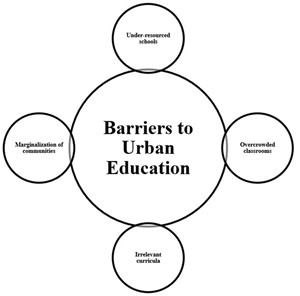
Rather than depicting a causal model, the figure functions as an analytical framework and heuristic that situates maternal teaching practices within intersecting dynamics of institutional neglect, gendered care responsibilities, and broader socio-economic constraints shaping educational provision in low-income urban contexts. This outline shows that mothers’ educational labour during school closures emerged not from absence but from systemic neglect. Faced with marginalisation and institutional failure, they reimagined teaching under pressure. Yet, their efforts remained largely invisible, often framed by deficit narratives rather than recognised as acts of resilience and innovation. This reflects forms of symbolic and structural erasure, in which teaching under poverty is commonly perceived as reactive rather than pedagogical (Robbe, De Wilde and Sanchez, 2024). Grassroots testimonies, such as a mother using rice grains to teach maths, illustrate how education is instead shaped by care, creativity, and determined improvisation under constraint. The table below was developed through a comparative synthesis of illustrative examples drawn from the analysed sources to show how recurring structural challenges are met with contextually grounded pedagogical responses by mothers across different urban settings. Rather than providing exhaustive coverage, it foregrounds patterned practices that demonstrate maternal pedagogical agency expressed through improvisation, care, and critical awareness.
Table 1. Illustrative structural challenges and maternal pedagogical responses in selected urban contexts (synthesised from Andrew et al., 2020; Maloiy and Wawire, 2021; and Sugiyo, Pranoto and Pupala, 2023)
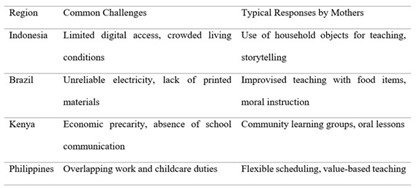
By juxtaposing structural challenges and pedagogical responses, the table supports the analysis by highlighting patterned forms of maternal pedagogical agency expressed through improvisation, care, and critical awareness under conditions of constraint, rather than offering exhaustive or representative comparison across contexts. As the table demonstrates, these routine acts of resistance challenge prevailing stereotypes that situate poor mothers as uninvolved in education. Instead, they enact a certain practice of inventive and critically engaged teaching forged in necessity and care. The variety of responses also imply the value of community-based curriculum in creating education amidst systemic abandon.
Theme 2: The home as a strategic learning space
Low-income urban homes in media discourse are routinely represented as inappropriate for learning because they are often overcrowded, noisy, and resource-free. But this perspective overlooks the inventive ways in which mothers turn domestic settings into lively learning spaces. When school is interrupted, as during COVID-19, the home does not stop educating; it adjusts. As bell hooks (1994: 45) explains, it becomes a ‘site of resistance and creation’, the result of an education that arises out of need and nurture. Mothers have reimagined physical space with intention during lockdown in Indonesia, Brazil and Kenya, countries where multiple studies have documented the educational responses of low-income families amid school closures (Andrew et al., 2020; Maloiy and Wawire, 2021; Robbe, De Wilde and Sanchez, 2024). Kitchens have taken after writing stations, porches are like storytelling circles and alleyways turned into math labs (Maloiy and Wawire, 2021). Such spatial relocations are not accidental but indicative of what Oladi (2025: 19) identifies as ‘micro-pedagogical agency’: the strategic process of teaching within limits.
The home provides emotional shelter and cultural embedding, even more than physical reclamation. Mothers leveraged the mundane such as rice grains, cooking utensils, and daily routines, to foster learning and grit during school closures. For example, one Jakarta-based mother shared: ‘Then I teach my children why we have to keep learning, even when the world feels broken. Knowledge resides in our lives, not just in books’. And the theme reflects Freire’s conviction that education starts from experience (Robbe, De Wilde and Sanchez, 2024; Andrew et al., 2020). They are not alternative schools; these homes operate as learning ecologies, developed systems embedded in people, schedules, icons and feeling. They contest hegemonic binaries of formal and informal education. As Archibald, Graham and Larsen (2021) contend, community-based learning sites such as the home are not second, but first in line, more so in regions of the global South. And so, the home becomes not only a shelter, but also an intentional, symbolic and affective classroom curated by often unrecognised mothers whose work is profoundly pedagogical. As shown in Table 2, these practices demonstrate the educational roles embedded in home settings, highlighting how care, creativity and perseverance underpin maternal pedagogies.
Table 2. Informal educational practices by mothers during COVID-19 (adapted from Robbe, De Wilde and Sanchez, 2024 and Andrew et al., 2020)
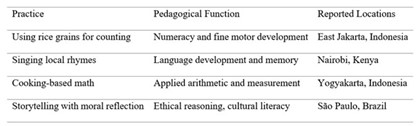
These four examples reflect maternal labour and pedagogical agency in adversity. Though often seen as improvised, home-based teaching embodies a critical, situated pedagogy that challenges narrow institutional definitions of learning. While research often focuses on mothers’ roles in literacy or numeracy, less attention is given to their broader educational work. Within low-income households, mothers frequently take on roles that go beyond academics. This includes moral guidance, emotional support, and social literacy, intentional, everyday practices rooted in care, survival, and relational knowledge, as shown in Figure 2.
Figure 2. Pedagogical dimensions of maternal home-based education (developed by the author based on a thematic synthesis of Robbe, De Wilde and Sanchez, 2024; Andrew et al., 2020; and Seong Pek and Wong Mee Mee, 2020)

These pedagogical dimensions amount to more than mere coping mechanisms: they are affective, ethical and communitarian ways of teaching. There is moral instruction through storytelling and example-setting, social literacy develops through face-to-face interaction in the family context as well as caregiving routines; emotional support keeps motivation going in the absence of formal schooling. The joint effort provides an inspiring reimagining of what qualifies as education.
Theme 3: Resistance narratives - anger, frustration, and teaching anyway
Underneath each act of informal teaching on the part of low-income mothers there is a rich emotional terrain: anger at systemic neglect, grief over lost educational opportunity, frustration at being blamed and yet fierce determination to keep teaching. This emotional labour is not incidental but essential to how learning takes place within the home. However, in mainstream discussion it tends to be omitted, and emotion itself is often considered irrelevant for critical teaching (Xiong et al., 2021). For a lot of mothers, teaching during school closures was defiance more than it was simply duty. Media accounts from southeast Asia and Latin America covered how mothers struggled with digital exclusion, how their children were at risk of dropping out of school, and how families coped with daily difficulties such as food shortages, unstable income, and lack of access to childcare (Chmielewska et al., 2021). Mothers raged against government failures and despaired over the absence of meaningful virtual learning, but they made do anyway, building games, repurposing household objects, and telling stories.
This labour of feeling is pedagogical. It nourishes learning not only with content but also presence, care and stability. One mother, in a sit-and-listen testimonial video, shared:
“I was angry, angry at my school for not providing any help, and angry with myself for not being able to provide wonderful lessons. But I continued to sit with my daughter every morning anyway; no one else would do it” (Robbe, De Wilde and Sanchez, 2024: 97).
These words capture what Kassaye (2024) calls affective resistance, resilient action forged in moral imperative and emotion. These stories contradict the traditional heroic mother, one who is endlessly nurturing, self-sacrificing, and emotionally available, regardless of her own needs. Instead, they reveal what Federici (2018) refers to as the exploitation of care: those systems relying on unpaid, undervalued emotional labour. These women are not teaching out of adaptive strength but because they will not be abandoned. Anger is redefined here not as a breakdown, but as political consciousness. This article re-theorised maternal emotion as a productive pedagogical force, rooted in the refusal to accept institutional neglect, sustained through radical care, and motivated by a commitment to justice.
Theme 4: Media representations: from victimhood to educational agency
Popular narratives play a powerful role in shaping who is recognised as an educator and what is defined as educational labour. For economically disadvantaged mothers, this recognition has been inconsistent and often problematic. On one hand, mainstream media during the COVID-19 pandemic highlighted their resilience, often framing them as heroic figures keeping families afloat amid crisis (Chmielewska et al., 2021; Save the Children, 2020). Such portrayals often reduce women’s roles to simplistic stereotypes, either tragic victims or saints of suffering (Robbe, De Wilde and Sanchez, 2024). A review of media coverage from 2020 to 2023, including sources like the British Broadcasting Corporation (BBC), The Jakarta Post, and Kompas, revealed that depictions of mothers frequently oscillated between heroic endurance and helplessness, with little middle ground or structural critique. Fathers and male caregivers were largely absent, reinforcing gendered assumptions in caregiving.
These reductive tropes were echoed in academic and NGO literature, which, while sympathetic, often failed to challenge the conditions that create such burdens. As Frawley (1993) notes, these discursive containers make suffering palatable without confronting the systems that produce it. However, alternative narratives are emerging. Independent and community-based media such as The Conversation, Kompasiana, and Magdalene.co have featured mother-led education stories that disrupt dominant framings. First-person testimonies and local forums reveal that mothers were not merely coping, but actively shaping educational environments, creating informal curricula, setting routines, and fostering emotional growth in the absence of formal guidance.
As highlighted in the discourse analysis, linguistic framings, such as referring to mothers as ‘left behind’ versus ‘holding things together’, play a significant role in shaping public perceptions of maternal educational labour. As Van Dijk (2016) argues, discourse doesn’t just reflect reality, it constructs it. To achieve representational justice, we must shift our view of low-income mothers from objects of concern to producers of knowledge, reimagining who teaches, where, and how learning takes place.
Discussion
The educational disruptions that necessitated parental teaching are not only symptoms of isolated institutional failures, but manifestations of a broader meta-crisis rooted in the logics of neoliberalism. As Andreotti (2011) notes, neoliberal frameworks in education promote individual responsibility, market-based reforms, and the outsourcing of public duties to private actors, including households. This ideological shift has led to the erosion of public education systems through austerity, privatisation, and managerial accountability, disproportionately burdening marginalised communities. Within development education, this dynamic is viewed as a structural injustice that reshapes the very conditions under which learning occurs (Bourn, 2014). As states retreat from their social responsibilities, the work of sustaining education is offloaded onto families, particularly mothers, who are expected to fill systemic gaps without resources or recognition. This displacement of responsibility constitutes a key site of contestation in critical development education and underlines the urgent need to reframe maternal educational labour not as a coping strategy, but as a politically situated response to neoliberal neglect.
Before the empirical analysis, our article raised two key questions: who is recognised as an educator? And who decides what counts as educational labour? Mainstream discourse often limits teaching to credentialed professionals in formal institutions, sidelining the roles of parents, especially mothers, as informal or secondary. Yet, the COVID-19 pandemic and the everyday realities of urban poor families reveal that learning continues beyond classrooms, shaped by routines, cultural practices, and care. This article highlights how low-income mothers engage in complex, creative pedagogies, challenging structural neglect. Their contributions, though widespread globally, remain marginalised by classed and gendered educational frameworks.
Mothers as everyday educators
Drawing on testimonies, NGO reports, and community narratives, this article highlighted how poor mothers do not merely support formal education but actively shape pedagogical processes in their homes. While mainstream discourse often frames them through a lens of deficiency, the evidence revealed how they construct learning spaces grounded in care, storytelling, and moral instruction (Robbe, De Wilde and Sanchez, 2024; Save the Children, 2020). Interpreted through a Freirean teaching framework and intersectional feminist theory, these actions constitute not passive coping mechanisms, but intentional forms of educational resistance and cultural reinvention.
At its heart, Pedagogy of the Oppressed (Freire, 1970) issues a call to construct education from lived contexts. This vision is reflected in the everyday practices of mothers who turn their homes into spaces of learning, care, and resistance. Teaching multiplication with rice grains, reading stories between chores and talking ethics over breakfast are all examples of praxis, the joining together of reflection and action as a response to injustice. These are not casual acts born of panic or helplessness. They are grounded, as radical domestic pedagogies, in love, necessity, and critical insight.
Transforming the home into a learning space
The home, traditionally framed in policy and educational discourse as a private or apolitical space (Hill, 2015; Antony-Newman, 2019), instead becomes a site of resistance. Mothers transform kitchens, staircases, and porches into informal classrooms that mirror what Archibald et al. (2021) describe as learning ecologies, networks outside formal schooling that profoundly shape children’s growth. Within these spaces, education is communal, emotional, and deeply feminised.
Emotion as pedagogy
The emotional world these mothers inhabit is a form of education in itself, teaching values, endurance, and meaning. Kassaye (2024) calls this a process of affective justice, where emotion becomes political. When mothers continue to teach despite lacking resources, they are not just resisting poverty, they are reshaping the definition of education. Yet, these women are rarely acknowledged as knowledge holders. Media often swings between sympathy and blame, rarely recognising mothers’ intellectual or pedagogical contributions (Robbe, De Wilde and Sanchez, 2024; Chmielewska et al., 2021). Their voices are also largely missing from policy. True educational equity requires not just hearing them but involving them as co-creators in transforming how we define and deliver learning.
A call to reimagine education
This article went beyond critiquing institutional neglect; it offered a proposition: to recognise the pedagogical value of caregiving under constraint and to shift the narrative from blame to co-creation. As Freire (1970: 87) wrote, ‘to speak a true word is to transform the world’. The mothers described in this article spoke such words not through formal curricula, but through daily acts of love, resistance, and unrecognised brilliance in kitchens, alleyways, and bedtime stories. UNESCO’s (2020) Education in a Post-COVID World calls for the inclusion of informal and community-based learning within broader education systems and policy frameworks. Similarly, Indonesia’s Merdeka Belajar policy encourages student-centred learning rooted in local knowledge and family engagement. Recognising maternal pedagogies within these frameworks reinforces the need to value, not replace, care-based educational practices already thriving at home.
Beyond its theoretical contributions, this article held important implications for development education practice. The findings suggest that development education initiatives should move beyond school-centred and institution-led models of learning to recognise and engage with existing home-based pedagogies. Maternal practices documented in this article exemplify key development education principles - critical consciousness, relational learning, and agency rooted in lived experience, that can inform community-based programmes, participatory curriculum design, and educator training. Development education practitioners can learn from these practices by valuing emotional labour, storytelling, and everyday problem-solving as legitimate pedagogical tools rather than supplementary or informal activities.
More explicitly, the maternal pedagogies documented in this article exemplified core principles of development education by fostering critical consciousness through learning grounded in lived experiences of inequality, enabling agency as mothers actively designed education under constraint, and sustaining collective learning through relational practices of care and shared problem-solving. For development education practitioners, these findings highlight the value of recognising and working with existing home-based pedagogies rather than displacing them with externally designed interventions. From a policy perspective, strengthening development education requires acknowledging mothers as knowledge holders and integrating their pedagogical insights into community-based programmes and equitable education planning, without instrumentalising unpaid care labour.
Conclusion
This article offered a simple yet urgent insight: we must expand our understanding of who counts as an educator. In communities marked by poverty and systemic neglect, mothers are not peripheral, they are central actors in education. Their homes transform into classrooms, where care, storytelling, moral guidance, and resilience form the curriculum. These everyday practices are not supplementary but fundamental to knowledge transmission. Yet, formal education policies rarely reflect this reality, continuing to privilege institutional learning while marginalising domestic, informal pedagogies. To create more just and inclusive systems, we must move beyond symbolic appreciation and embed the lived knowledge of mothers into educational planning. Their understanding of children’s needs, cultural continuity, and survival strategies is not only valuable, but essential. In many low-income settings, mothers are already innovating, adapting, and sustaining education under pressure. As Freire reminds us, education is never neutral. These women embody its liberatory potential: quiet, persistent, and profoundly transformative.
From a policy and practice perspective, these findings call for a reorientation of development education and educational planning towards greater recognition of maternal pedagogical labour. Policies aimed at educational equity should acknowledge homes as active learning sites and involve mothers as knowledge holders rather than passive beneficiaries. Development education programming can build on this insight by supporting community-based learning initiatives, strengthening linkages between families and local education actors, and designing interventions that complement rather than displace existing care-based pedagogies.
Recognising and supporting maternal education practices is not merely an act of inclusion; it is a necessary step toward more just, context-responsive, and resilient educational systems in times of crisis. Seen through the broader dynamics of the meta-crisis, the educational labour of low-income mothers underscores how crises are increasingly managed through informal, feminised, and unrecognised forms of care. While such practices sustain learning in the short term, they also reveal the unsustainability of policy regimes that normalise institutional withdrawal and rely on private households to absorb public failure. Recognising maternal pedagogies therefore requires not only symbolic inclusion, but a critical interrogation of the political and economic conditions that render such labour necessary.
References
Ali, H A, Ahmed, M A, Ali, Z and Khan, M S (2022) ‘Vaccine equity in low and middle income countries: A systematic review and meta-analysis’, International Journal for Equity in Health, Vol. 21, No. 1, p. 82.
Althaus, C, Bridgman, P, Davis, G and Wanna, J (2021) ‘Research and education in public sector practice: A systems approach to understanding policy impact’, Policy Design and Practice, Vol. 4, No. 4, pp. 456-472.
Andrew, A, Cattan, S, Costa Dias, M, Farquharson, C, Kraftman, L, Krutikova, S, Phimister, A and Sevilla, A (2020) ‘Inequalities in children’s experiences of home learning during the COVID‐19 lockdown in England’, Fiscal Studies, Vol. 41, No. 3, pp. 653-683.
Andreotti, V (2006) ‘Soft versus critical global citizenship education’, Policy and Practice: A Development Education Review, Vol. 3, Autumn, pp. 40–51, available: https://www.developmenteducationreview.com/issue/issue-3/soft-versus-critical-global-citizenship-education (accessed 17 January 2026).
Andreotti, V (2011) Actionable Postcolonial Theory in Education, Basingstoke: Springer, available: https://link.springer.com/book/10.1057/9780230337794 (accessed 17 January 2026).
Antony-Newman, M (2019) ‘Parental involvement of immigrant parents: A meta-synthesis’, Educational Review, Vol. 71, No. 3, pp. 362–381.
Archibald, D E, Graham, C R and Larsen, R (2021) ‘Validating a blended teaching readiness instrument for primary/secondary preservice teachers’, British Journal of Educational Technology, Volume 52, No. 2, pp. 536–551.
Bajaj, M (2011) ‘Human rights education: Ideology, location, and approaches’, Human Rights Quarterly, Vol 33, No. 2, pp. 481-508.
Bourn, D (2014) The Theory and Practice of Development Education: A Pedagogy for Global Social Justice, Abingdon, Oxon: Routledge.
Boutte, G S and Johnson Jr, G L. (2013) ‘Community and family involvement in urban schools’ in H R Milner and K Lomotey (eds) Handbook of Urban Education, New York: Routledge, pp. 205–225, available: https://ebrary.net/173085/education/community_family_involvement_urban_schools (accessed 26 July 2025).
Calderon-Berumen, F (2021) ‘Latina immigrant mothers as educators: A testimonio of becoming’, International Journal of Qualitative Studies in Education, Vol. 34, No. 3, pp. 262–275.
Chmielewska, B, Barratt, I, Townsend, R, Kalafat, E, van der Meulen, J, Gurol-Urganci, I, Hollowell, J et al. (2021) ‘Effects of the COVID-19 pandemic on maternal and perinatal outcomes: A systematic review and meta-analysis’, The Lancet Global Health, Vol. 9, No. 6, pp. e759–e772, available: https://www.thelancet.com/journals/langlo/article/PIIS2214-109X(21)00079-6/fulltext (accessed 28 October 2025).
Federici, S (2018) Re-enchanting the World: Feminism and the Politics of the Commons, Oakland: PM Press, available: https://www.thetedkarchive.com/library/silvia-federici-peter-linebaugh-re-enchanting-the-world (accessed 26 July 2025).
Frawley, W (1993) ‘Review: Norman Fairclough, Discourse and Social Change’, Language in Society, Vol. 22, No. 3, pp. 421–424.
Freire, P (1970) Pedagogy of the Oppressed, New York: Herder and Herder, available: https://fsi-ebcao.princeton.edu/sites/g/files/toruqf1411/files/media/freire.pdf (accessed 26 July 2025).
Freire, P (2021) Education for Critical Consciousness, London: Bloomsbury Academic, available: https://www.torrossa.com/it/resources/an/5203915 (accessed 26 July 2025).
Gadsden, V L and Dixon-Román, E J (2016) ‘“Urban” schooling and “Urban” families: The role of context and place’, Urban Education, Vol. 52, No. 4, pp. 431–459.
Gaynor, N (2016) ‘Rounds Pegs in Square Holes? Development Education, The Formal Sector and The Global Knowledge Economy’, Policy and Practice: A Development Education Review, Vol. 23, Autumn, pp.1-15.
Gil, E and Johnson, A (2021) ‘“We, as parents, do have a voice”: Learning from community-based programs effectively engaging parents in urban communities’, Urban Education, Vol. 59, No. 4, pp. 1048–1077.
Giroux, H A (2013) ‘Can democratic education survive in a neoliberal society’ in C Reitz (ed.) Crisis and Commonwealth: Marcuse, Marx, McLaren, Maryland, US: Lexington Books, pp. 137-152.
Hill, N E (2015) ‘Including fathers in the picture: A meta-analysis of parental involvement and students’ academic achievement’, Journal of Educational Psychology, Vol. 107, No. 4, p. 919, available: https://psycnet.apa.org/buy/2015-23320-001 (accessed 26 July 2025).
hooks, b (2014) Teaching to Transgress: Education as the Practice of Freedom, New York: Routledge.
Irwin, S and Winterton, M (2020) ‘Qualitative secondary analysis and social explanation’, Sociological Research Online, Vol. 17, No. 2, pp. 1–12.
Kassaye, W (2024) ‘Traditional/Indigenous education of Ethiopia’ in W Kassaye (ed.) Education and Curriculum Development of Africa Vol. 1: Indigenization and Knowledge Production in Ethiopia, Cham: Springer Nature Switzerland, pp. 89–160.
Maloiy, L and Wawire, V (2021) Status and Dynamics of Gender Mainstreaming in East Africa Community COVID-19 Social and Economic Response Policies, Strategies and Interventions, Nairobi: African Economic Research Consortium (AERC), available: https://publication.aercafricalibrary.org/items/7e1a77fc-78b7-4f35-8332-63e507a96315 (accessed 28 October 2025).
Murray, J (2021) ‘Informal early childhood education: The influences of parents and home on young children’s learning’, International Journal of Early Years Education, Vol. 29, No. 2, pp. 117–123.
Oladi, S (2025) ‘Conclusion: Forever migrants: Mothers, students, stories’ in S Oladi (ed.) Immigrant Student Experiences in Canada: Mothers and Children Storying Belonging, Cham: Springer Nature Switzerland, pp. 269–287.
Robbe, E, De Wilde, J and Sanchez, A (2024) ‘Digital narratives and migrant belonging on YouTube: Prospects and limitations of participative media’, I-LanD Journal: Identity, Language and Diversity, Vol. 1, No. 2, pp. 81–104.
Save the Children International (2020) ‘Protect a Generation: The Impact of COVID-19 on Children’s Lives’, London: SCF, available: https://resourcecentre.savethechildren.net/document/protect-generation-impact-covid-19-childrens-lives (accessed 28 October 2025).
Seong Pek, L and Wong Mee Mee, R (2020) ‘Parental involvement on child’s education at home during school lockdown’, JHSS (Journal of Humanities and Social Studies), Vol. 4, No. 2, available: https://doi.org/10.33751/jhss.v4i2.2502 (accessed 29 October 2025).
SMERU (2021) COVID-19 and Learning Loss in Indonesia: Evidence and Policy Recommendations, Jakarta: SMERU Research Institute, available: https://smeru.or.id/en/publication/covid-19-and-learning-loss-indonesia-evidence-and-policy-recommendations (accessed 29 October 2025).
Sugiyo, Pranoto, Y K and Pupala, B (2023) ‘Indonesian children’s voices of the school-from-home policy’, International Journal of Early Years Education, Vol. 31, No. 1, pp. 130–152.
Tripathy, J P (2013) ‘Secondary data analysis: Ethical issues and challenges’, Iranian Journal of Public Health, Vol. 42, No. 12, p. 1478, available: https://pmc.ncbi.nlm.nih.gov/articles/PMC4441947/ (accessed 26 July 2025).
UNESCO (2020) Education for Sustainable Development: A Roadmap, Paris: UNESCO.
Van Dijk, T A (2016) ‘Estudios críticos del discurso: Un enfoque sociocognitivo’, Critical Discourse Studies, Vol. 10, No. 1, pp. 137–162, available: https://dialnet.unirioja.es/servlet/articulo?codigo=5640506 (accessed 26 July 2025).
Xiong, Y, Sun, X, Liu, Y and Wang, P (2021) ‘Parental involvement in adolescents’ learning and academic achievement: Cross-lagged effect and mediation of academic engagement’, Journal of Youth and Adolescence, Vol. 50, No. 9, pp. 1811–1823.
Aris Sarjito is a lecturer at the Republic of Indonesia Defense University. His research focuses on critical pedagogy, development education, and informal learning in contexts of poverty and inequality, particularly in the global South. He also collaborates with civil society organisations on education and social justice initiatives.
Nora Lelyana is a lecturer at Hang Tuah University, Indonesia. Her research focuses on gender, community development, and inclusive education, particularly in marginalised communities. She is active in collaborative projects with NGOs and local governments promoting gender equity, educational access, and social resilience.